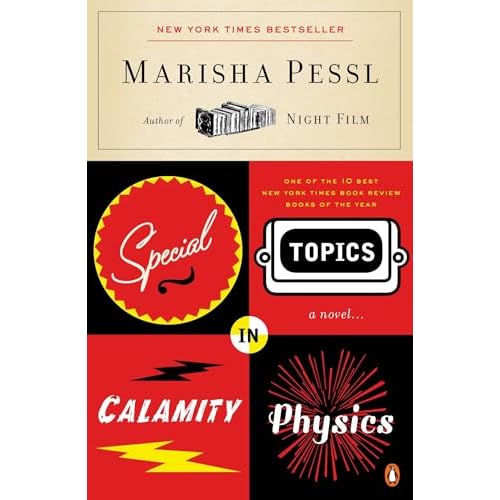
Cover ImageI can say (somewhat truthfully) that Mary Roach gave me this book. 

OK, so the author didn’t give it to me.  I almost bought this book a while ago because I work with a woman named Mary Roach.  Since she’s our resident expert on all things medicine, and mysterious about everything else in her life, I wouldn’t have been surprised if she secretly authored this book (of course the author photo would have been doctored har har). When I told her this, she not only laughed, she said she had the book and brought it in for me. 

I wasn’t really sure if I was actually going to like this book. I’ve read many treatises on obscure, seemingly interesting topics and most of them, though well intended, fail miserably to be interesting.

Not so this book.

Read the rest of this entry »

There are many stories about warped or slightly skewed fairy tales.  This is certainly one of them, but not quite.

The most important difference is of course the quality of writing.  This is my first experience with John Connolly, but it will decidedly not be my last.  He has a eye for imagery and a gentle but persistent grasp on plot.    This man knows how to tell a good story.

The second reason is that the warping of the classic tales in this story are not for political purposes (don’t tell that to the communist 7 dwarfs though).  Or for simply humorous ones (although it is quite humorous at times).  It is for one simple reason: The characters themselves made it that way.  Each of the monsters and magical perversions in this world is someone’s fear, based in the foundation of sometimes horrific children’s tales.  The rulers of this kingdom are stolen children, trapped in a world they don’t know or understand. They make sense of it the best way they can – through the lens of tales they grew up on. 

Read the rest of this entry »

Cover ImageOK, I have an assignment for you. 

Cover Image

Go out to the bookstore or library. 

Get The 13 1/2 Lives of Captain Bluebear.

Read it, preferably aloud, to a loved one. 


Finished? 

Good, now that you’ve had a little taste of Moers, you’re probably good and soundly addiction.  Go straight back out and get Rumo (sorry, I should have told you that the first time). 

I’m not a fan of sequels, and thankfully this one is not.  You will see recurring characters and creatures from Blue Bear, but you will not see (at least I haven’t so far) Blue Bear himself.  For the uninitiated, this tale of Zamonia will seem like a bunch of nonsensical balderdash.  

Readers of Blue Bear will know it’s a bunch of nonsensical balderdash. 

Read the rest of this entry »


P&PI’ve never been one for “studying” literature.  Dissecting plot lines, themes and social context doesn’t really inspire me.  That is the main reason why I never pursued a degree in English Literature, despite my passion for reading it. I didn’t want to make it work.

My senior year in high school AP English is a perfect illustration.  We studied a lot of works that year (1984, Canterbury Tales, and Macbeth to name a few).  The total number of pages I read can be calculated easily – zero.  How did I pass?  My class was filled with the smartest of the smart kids that year (one major exception being my friend Christine who, I suspect for communist reasons, opted out of AP for regular English class *gasp*) and all I had to do was let them start the discussion and take their talking points a bit further down the road. 

I’ve never been haunted by the ghosts of AP English past, and I’ve never taken the time to read the books I should have read ten years ago.  In fact, I always felt as if I had already read Pride and Prejudice.  It’s such a famous book that it’s wormed its way, Jungian style, into the literary and popular culture (see it referenced in the movie You’ve Got Mail).  Between the BBC version, the new Keira Knightly movie and the pervasive Bridget Jones I’m sure everyone feels it would be a bother to actually open the pages.  We already know the story. 

Read the rest of this entry »

There are a ridiculous number of books on dog training and in my neurotic quest to get it right with my puppy, I’ve read most of them, to my own detriment.  There are dog listeners, dog whisperers and dog channelers; all of them claim to know the one right way to train your dog.  There are those who sit on their dogs, those who blitz them with “leadership signals” (whatever these are), those who believe you shouldn’t greet your dog when you get home, and those who think you should eat a cracker before serving your dog its food, just to show him whose boss.   Consequently, my head is brimming with conflicting facts and theories, ideology and philosophy.  It’s giving me a migraine.

The major fare that each of these authors (I’ll purposefully leave them unnamed, though you know who they are) is selling is that they have the GOSPEL – the holy word of dog.  In order that to find nirvana with your canine friend (to mix religious metaphors) you have to follow their way and no other.

Read the rest of this entry »

Cover Image


Sometimes in a split-second, implusive decision you can pick up a book that is exactly what you are supposed to be reading at the very moment in your life.  Sometimes you find a book that you are ready to listen to, even though you wouldn’t normally be open to what it has to say to you.  You don’t, as usual, ignore the importance of the messages it contains.  You find the book just when you can use it most.

For me, now is that sometime.

Families are something we all struggle with, not matter how “good” or “bad” our upbringing and current situation.  There are conflicts and tensions so tightly interwoven with our psyches that some never know what are their own ideas and what is their reaciton to their family.  Creating our own families is likely the only thing scarier than dealing with the ones we already have.  Particularly if we feel insufficiently prepared, as most of us do.

Delving into these issues, this book addresses the question what is family?  And not surprisingly it does not give any answers.

Read the rest of this entry »

The ability of children’s literature to handle the “hard topics” is often underestimated.  Sometimes authors are criticised for pandering to children; they are accused of telling kids that the world is a good place where the bad guy always loses.  Embarrassingly my return to YA fiction in my adulthood was for this very reason.  Mostly it has been about nostalgic memories and a yearning for simpler stories.  As I creep farther and farther in adult society, children’s stories address a need for clear cut lines and black and white outcomes. 

If only it were that simple.  That I am misremembering is becoming increasingly clear.  Books like Bridge to Terabithia, Where the Red Fern Grows, Charlotte’s Web, and Tuck Everlasting are simple?  Clearly not.  They delve deeply into the basic questions of life: death, love, family and loss.  I’m finding that most YA fiction written today follows the example of these classics.  In fact these days authors more often come under heavy fire for treating kids as they should – as intelligent beings able to deal with complex issues.

Read the rest of this entry »

H&GSometimes, while reading a good book I hear a buzzing, needling little voice floating around in the back of the mind.  Every time I try to capture it, it quickly dissolves away.   But it’s persistent and it generally ruins what would otherwise be a great reading experience.

I’ve spent the past two days completely riveted by this poignant and vivid  story of a young Jewish girl and her brother. Newly christened Hansel and Gretel,  they are abandoned by their stepmother and father in the woods of Poland.  Their journey toward survival is so heartbreaking and so real that I found myself wrapped in a blanket in my warm armchair, still shivering along with these two cold children hidden under leaves and snow.


Read the rest of this entry »

Just in case any of you were wondering if I had crushes on female authors. . .

****

My science training tends to color my thought processes in strange and funny ways. Science is all about theories and the “facts” to support them (See Roberts Hooke and Boyle 1650-1703). It oftentimes seems to be at odds with my love of fiction, which requires a conscious suspension of disbelief (see also dramatic convention). Somehow though, my brain has learned to reconcile the two (see right vs. left brained funderstanding.com, 2007).

I love a well formatted document (Publication Manual, APA 2001) or a heavy tome about something interesting (see Selfish Gene, Dawkins, 2004).  I also love an unabashed classic of literature (see Penguin Classics) but when a great novel comes along that tickles that sciency part of my brain, it’s a uniquely pleasurable experience (October, 2001).

Read the rest of this entry »

We all have our essential qualities that drive us forward or trip us up, that make everything in life work or break down, but we don’t notice them because we’re too busy worrying about the price of gas or whether or not someone likes us back. It takes life starting over — something that rarely, if ever, happens — to make us look inside without the usual mundane distractions.

But when you die, return from the afterlife, save the universe a couple times, and finally come back to where you were at the start of it all — that’s a grand opportunity. Only in the funny books!

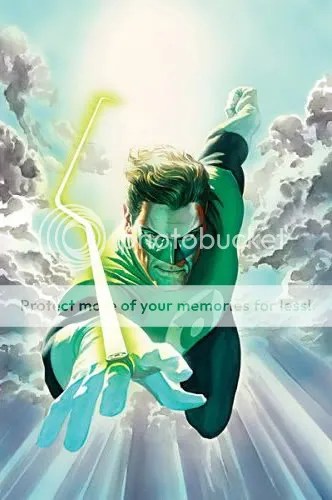
At the start of Green Lantern: No Fear, Hal Jordan has returned to his former life, but nothing is the same (the details of his previous life chapter aren’t important for the purposes of this story — ain’t that nice? — and there’s a recap at the beginning of the book if you must know). Coast City, his hometown, was destroyed by a super bad guy and is only partway through a troubled, halting reconstruction. His brothers and their families hardly know him. He has to earn his way back to the top of his former career as a test pilot. We’re reading about a rebirth, a starting back from Square One, so we get to see his essentials, and see ourselves in them as well. Of course, since this is a Green Lantern comic book, fear is the biggest player in Hal Jordan’s psyche. Writer Geoff Johns knows that this is, conveniently, the biggest player in our collective real world psyche as well.


Read the rest of this entry »

Jessica’s Reading

Jesse’s Reading

Jesse and Jessica are Both Reading

Devin’s Reading

Categories