
 I’ve already mentioned that I’m a huge Jane Austen fan so it’s no surprise that I would pick up a book with the subtitle Pride and Prejudice Continues (there are dozens of them, but, dismissing the old adage, I picked this one because of its cover art). Not all characters are interesting enough to follow after their story has ended but Elizabeth and Darcy are certainly two that are. One can imagine a future relationship of adventure, love and shared wit. Something interesting was happening there, which surely would continue. But what exactly did their happily ever after include?
According to the author – lots and lots of sex.
One of the characters in this book, (and I’m getting the feeling she will add to the intrigue later in the story) is Juliette Clisson, daughter of a French Viscountess. She is the unofficial mistress and well paid escort of Mr. Darcy for many years before he weds. She is rich, beautiful and decidedly high class despite her profession.
Mr. Darcy Takes a Wife (and yes, I can only imagine the title is meant to be ironic, because it seems like all he does is take her – in the bath, in the carriage, on the grounds of Pemberly) is similar to Ms. Clisson in many ways, but mostly because they are both high brow smut. Don’t get me wrong, this book does not aim to hide the nature of its story, in fact it’s likely the book’s main selling point. Alas, however, I expected a story in there somewhere.
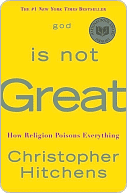 My life, like a lot of others, is not made up of epiphanies. It’s the continual presence of small, evolving thoughts that make the biggest changes in my perspective, rather than the cataclysmic breaks from ideology. I couldn’t tell you when I first learned about evolution, though my current interest and study is clearly the result of some early interest piqued and nurtured. Nor could I pinpoint the moment I broke my covenant with God (an agreement made by others for me, before I was able to make it). It was too gradual to know when I finally parted ways with the Catholic Church.


 To delve into a book completely is, to me, the greatest part of reading. There is great freedom in suspending your own internal voices and embracing a story without reservation. Which isn’t easy when the voices in your head are used to being listened to (as mine are). Oftentimes part of this suspension is allowing yourself to be easily led where the author wants you to go. Which can be exactly where you don’t want to go and sometimes it can be away from something you want to see. They lock the doors and take the lights out on the stairs. All we can do is turn away and go where the path is open.
 Hunter Thompson does something unique in this book that I wish more political journalists tried. He’ll spend almost an entire chapter writing about the campaign like gripping sports commentary and then, just as you’re caught up in the excitement, he whips out a trail of hopeless vitriol about the sham of the entire process. He’s doing his job, but he’s tired of it, and that exhaustion is worth noting. We can pretend this is a contest or a race, or any of the other terms journalists use to trivialize the most sacred act of our democracy, but we should remember that it’s much more serious than that.

 What We're Reading Now