
You are currently browsing Jessica’s articles.
 I’ve already mentioned that I’m a huge Jane Austen fan so it’s no surprise that I would pick up a book with the subtitle Pride and Prejudice Continues (there are dozens of them, but, dismissing the old adage, I picked this one because of its cover art). Not all characters are interesting enough to follow after their story has ended but Elizabeth and Darcy are certainly two that are. One can imagine a future relationship of adventure, love and shared wit. Something interesting was happening there, which surely would continue. But what exactly did their happily ever after include?
According to the author – lots and lots of sex.
One of the characters in this book, (and I’m getting the feeling she will add to the intrigue later in the story) is Juliette Clisson, daughter of a French Viscountess. She is the unofficial mistress and well paid escort of Mr. Darcy for many years before he weds. She is rich, beautiful and decidedly high class despite her profession.
Mr. Darcy Takes a Wife (and yes, I can only imagine the title is meant to be ironic, because it seems like all he does is take her – in the bath, in the carriage, on the grounds of Pemberly) is similar to Ms. Clisson in many ways, but mostly because they are both high brow smut. Don’t get me wrong, this book does not aim to hide the nature of its story, in fact it’s likely the book’s main selling point. Alas, however, I expected a story in there somewhere.
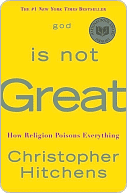 My life, like a lot of others, is not made up of epiphanies. It’s the continual presence of small, evolving thoughts that make the biggest changes in my perspective, rather than the cataclysmic breaks from ideology. I couldn’t tell you when I first learned about evolution, though my current interest and study is clearly the result of some early interest piqued and nurtured. Nor could I pinpoint the moment I broke my covenant with God (an agreement made by others for me, before I was able to make it). It was too gradual to know when I finally parted ways with the Catholic Church.
I used to envy those with faith, thinking that by lacking it I was lacking something else far more important (turns out maybe I just don’t have the ‘god gene’). But over the years I’ve become more comfortable letting that (Catholic) guilt go. Ultimately I’ve realized that by being an unbeliever I haven’t missed out on anything and in many ways it’s kept me above (or below or around) the fray. When the Church scandals came out I was able to feel the simple human emotions of revulsion and anger instead of loss and betrayal.
There is a stigma with admitting to atheism. People react as if you just admitted you don’t like you grandmother (personal experience talking here). There is an intense pressure to explain yourself, to say what you do believe in, as if people fear that a flood or burning bush or lightening may strike you down and they might get caught in the divine punishment cross fire.


My vacation was too short. I had so many plans, so many things to do and so many books to read. All of which I didn’t do.
Choosing a books (or multiple books if you are me) for vacation is difficult to do well. Though I normally eschew nonfiction for mind candy fiction (hence Mr. Hitchens was put on hold), my brain would just not cooperate this past week. Nothing suited me. The plain Jane book I was reading (The God of Animals) was dispensed with too quickly on Day One. Day Two consisted of Jon Katz new book (Dog Days) dependably pleasant as always but also too quickly gone.
So I was left to sullenly and contrarily perused my shelves, standing in amazement (again!) that I have read them all (seriously how does that happen?) and ultimately went to the store and bought The Yiddish Policemen’s Union: A Novel by Michael Chabon. But put it down; it was too Jewish for vacation (don’t ask me what that means, I don’t really know. I partially blame the aforementioned Mr. Hitchens however) and would likely to require some thought. So I turned to Melissa Bank (The Wonder Spot), whose first book of stories left me cold, but her “new” novel was on sale for $5. It too, turned out to be too Jewish. What to do?
Fantasy – it was my only answer. Read the rest of this entry »


This blog would be remiss if one of us didn’t at least mention Harry Potter, so here’s a brief note. Harry and J.K. have weathered some harsh criticisms over the years (and it’s been a decade, can you believe it? If you were eleven like Harry when you read book one, you can read Deathly Hallows at a bar!) but I for one am willing to forgive practically everything (I say practically because I don’t know what is in store for the finale. I hope and pray J.K. will not let us down). I unabashedly adore Harry Potter and turn a conscious blind eye and ear to such criticisms.
I spent the majority of last night ignoring my dirty house, my pets and Tim so I could finish Harry Potter. In preparation for the newest book I used to read the entire series, something that is near impossible nowadays with the number of books and their inordinate length (oh yeah and my lack of time). So this time I settled for a Half Blood Prince re-read. I’m glad I did. I estimate that I’ve read about 200 books since this book came out two years ago (and yeah, I bought it the first day and read it the next day!). It’s hard to keep stories straight when they’re so involved (although one of the criticisms that J.K. recieves is that she offers clues to past stories in each of her books. I say THANK YOU, since I’m an old lady with a failing memory lately – not a vibrant 10 year old with nothing else to worry about. I need the help).
Now I’m ready.
Or am I? Despite my excitement, it’s still hard to believe that the next book is the last book.
 To delve into a book completely is, to me, the greatest part of reading. There is great freedom in suspending your own internal voices and embracing a story without reservation. Which isn’t easy when the voices in your head are used to being listened to (as mine are). Oftentimes part of this suspension is allowing yourself to be easily led where the author wants you to go. Which can be exactly where you don’t want to go and sometimes it can be away from something you want to see. They lock the doors and take the lights out on the stairs. All we can do is turn away and go where the path is open.
I make a habit of not reading book sleeve synopses. If I did, I might have been forewarned. Angelica is divided into four parts. I was only two sentences into part two when I realized I had been duped. Part one is centered on Mrs. Barton (Constance) and a pernicious spector haunting her life. I believed it all without reservation – it’s a great ghost story through and through. Of course she’s haunted. Of course she’s unable to remove it. Of course she hires someone to expel it from the house. Of course her husband has something to do with it.

I don’t usually have any embarrassment about what I’m reading in public. One notable exception was when I realized that I was reading The Position while in the waiting room at a pediatrician’s office. Oops. Fortunately all the patients were too young to read (or were too enthralled with Sponge Bob).
Since I started reading it, I’ve been quietly tucking One Perfect Day away in certain company and deftly hiding the title when on the subway. I carry it back cover out as I walk down the street.
I feel so guilty about hating weddings.
No one wants to be that asshole who rains on someone’s parade. And not just any parade – a wedding is the biggest ticker-tape, socially acceptable, self-congratulatory parade we have in our society. No other event (except perhaps the birth of a child) holds so much sway over everyone.
Hating weddings is like hating baseball, babies, apple pie or the Bush Administration. Admit it and you’re sure to be on a list of dissenters somewhere. You’re considered the worst kind of anti-American. You’re dangerous and must be stopped.

What to read next? It’s probably one of the most exciting and frustrating questions a reader can ask. It’s a tough question. Tougher still if you are a discerning reader looking for something new and interesting.
Though I like a good mind candy, beach read book as much as the next person, I’m a little more demanding when it comes to “good reads.” If it’s currently on the NYT bestseller list (Harry Potter being the exception), I don’t read it. If I see more than two people on the subway reading, I skip it. If it’s in the top 100 on Amazon or Barnes and Noble, I’ll pass. A good website for fiction for the anti-masses is bas bleu though they have been known to be very wrong (the Hazards of Good Breeding and Lucy are two notable examples).
The safest bet is to ask other reader friends. Reading is an experience made more enjoyable by sharing. The simple phrase “You gotta read this!” makes what is necessarily a solitary activity suddenly a social one. It’s the one thing guaranteed to drag us – hard core readers that is – out of our shells. We hold up our titles like recent travellers with a photo album. We want others to read – to see what we saw and to live what we lived.
 I can say (somewhat truthfully) that Mary Roach gave me this book.
OK, so the author didn’t give it to me. I almost bought this book a while ago because I work with a woman named Mary Roach. Since she’s our resident expert on all things medicine, and mysterious about everything else in her life, I wouldn’t have been surprised if she secretly authored this book (of course the author photo would have been doctored har har). When I told her this, she not only laughed, she said she had the book and brought it in for me.
I wasn’t really sure if I was actually going to like this book. I’ve read many treatises on obscure, seemingly interesting topics and most of them, though well intended, fail miserably to be interesting.
Not so this book.
 There are many stories about warped or slightly skewed fairy tales. This is certainly one of them, but not quite.
The most important difference is of course the quality of writing. This is my first experience with John Connolly, but it will decidedly not be my last. He has a eye for imagery and a gentle but persistent grasp on plot. This man knows how to tell a good story.
The second reason is that the warping of the classic tales in this story are not for political purposes (don’t tell that to the communist 7 dwarfs though). Or for simply humorous ones (although it is quite humorous at times). It is for one simple reason: The characters themselves made it that way. Each of the monsters and magical perversions in this world is someone’s fear, based in the foundation of sometimes horrific children’s tales. The rulers of this kingdom are stolen children, trapped in a world they don’t know or understand. They make sense of it the best way they can – through the lens of tales they grew up on.
 OK, I have an assignment for you.

Go out to the bookstore or library.
Get The 13 1/2 Lives of Captain Bluebear.
Read it, preferably aloud, to a loved one.
Finished?
Good, now that you’ve had a little taste of Moers, you’re probably good and soundly addiction. Go straight back out and get Rumo (sorry, I should have told you that the first time).
I’m not a fan of sequels, and thankfully this one is not. You will see recurring characters and creatures from Blue Bear, but you will not see (at least I haven’t so far) Blue Bear himself. For the uninitiated, this tale of Zamonia will seem like a bunch of nonsensical balderdash.
Readers of Blue Bear will know it’s a bunch of nonsensical balderdash.
 What We're Reading Now